
YouTube videos in this email:
Ok we were back at it last week. Felt like it had been forever since the last meeting. That one spare blank Wednesday in April really had an impact.
Just a reminder of the Tuesday coffee gathering at the Outlet Mall this morning at 10am for those who can make it.
We started with Acts chapter 1. Took it as a whole and talked about the amount of huge information in that one chapter. Jesus says goodbye with final instructions, Jesus ascends to Heaven (feast date of the Ascension is May 17), Holy Spirit descends on the Apostles (Pentecost Sunday is May 24), they determine who of the disciples will fill the 12th Apostle seat left open by Judas (feast date of St Mathias the Apostle, May 14). It is a very packed single chapter. Some major occurrences in that one chapter alone. You could say this section is the trigger for the start of everything to come. Jesus basically said “hey you know what I need you to do. You got this. Go get’em”
We talked a little about some other things that night too. Here is a bit of a point by point follow up on some of it. Not sure I got it all in.
- Why is the Archbishop called the Archbishop instead of just a bishop? Is it because his home parish is called a Basilica?
- when i looked it up to get it correct, this is the Google AI return:
An archbishop is called an archbishop because they are a “chief bishop” (from Greek arch-, meaning “chief” or “first”, and episkopos, meaning “overseer”) who oversees a major diocese, known as an archdiocese. They hold higher seniority and administrative authority over a province of bishops. [1, 2, 3, 4]Key reasons for the title include:- Etymology: The word combines the Greek prefix for “chief” with the term for “bishop,” literally meaning a primary or leading overseer. [1, 2]
- Administrative Scope: Unlike a standard bishop who leads a diocese, an archbishop usually leads an archdiocese, which is typically a larger, more historic, or centrally located city-region (e.g., a “metropolitan” see). [1, 2]
- Seniority: Archbishops often preside over an ecclesiastical province containing multiple smaller dioceses (suffragan dioceses). [1, 2]
- Honorific Rank: In some cases, the title is bestowed as an honor to a bishop of an important area rather than signifying administrative control over other bishops. [1, 2]
- Why is the Basilica named that? I had always thought the Basilica is a Cathedral given that new title because the Pope has said mass there once. But it seems that is not really correct. Here is again the Google AI return on that question:
A basilica is a distinguished Roman Catholic church granted special ceremonial privileges by the Pope due to its historical, artistic, or spiritual significance. While often architecturally defined by a large, rectangular, aisled design, a basilica is primarily a functional designation, ranking higher than a standard church but separate from a cathedral. [1, 2, 3]Key Aspects of a Basilica:- Designation: Only the Pope can declare a church a basilica.
- Types: There are 4 Major Basilicas (all in Rome) and over 1,800 Minor Basilicas worldwide.
- Privileges & Symbols: Basilicas are allowed to display the Ombrellino (a silk canopy) and the Tintinnabulum (a bell), symbolizing their link to the Pope.
Architectural Style: Historically, they are long, rectangular buildings with a central nave, side aisles, and an apse.
Major vs. Cathedral: A basilica is designated for its importance, while a cathedral is specifically the seat of a bishop. [1, 2, 3, 4, 5]Origins:
Originally in Ancient Rome, a basilica was a public building used for courts and administration. When Christianity adopted this style in the 4th century, it became the standard for large church construction. [1, 2, 3]
- What is the difference between a Cathedral and a regular Church or Parish? Once again, Dr. Google to the definition rescue
A cathedral is a specific type of church that serves as the official seat of a bishop, acting as the central church for a diocese. While all cathedrals are churches, not all churches are cathedrals. The key distinction is functional (having a bishop) rather than size or architectural grandeur, though cathedrals are often large. [1, 2, 3, 4, 5]Key Differences:- Definition & Leadership: A church is a general term for a Christian place of worship run by a pastor or priest. A cathedral is a church that houses the cathedra (Latin for “chair” or “seat”) of a bishop, acting as their headquarters.
- Hierarchical Status: A cathedral is the “mother church” of a diocese—a specific geographical area—making it administratively superior to local parish churches.
- Function: While local churches primarily serve their congregation, a cathedral serves the entire diocese, often hosting major, regional services.
- Architecture: Although a cathedral can be small, they are often grand and historic, built to reflect their importance. [1, 2, 3, 4, 5, 6, 7]Key Takeaways:
- Cathedra: The defining feature is the bishop’s seat, or cathedra.
- Regional Role: A cathedral represents the bishop; a church usually represents a local parish.
- Changeability: If a bishop moves their seat, the new church becomes the cathedral, and the old one typically becomes a standard church. [1, 2, 3, 4, 5]
- when i looked it up to get it correct, this is the Google AI return:
So there is some key takeaways there. Another tidbit i was not really aware of was that on the alter for mass, every item has Biblical significance except for two things. They are call the PALL’s. Those are the small square fabric covered cardboard covers that they place over top of the chalice and bread when necessary. They don’t have any scriptural significance. Their function is merely practical, in that they are meant to keep the flys away from the sacraments while they are being consecrated. And everything else has a scriptural connection.
Interesting discussions. We revisited the discussion about how distressing and painful it can be to have our children reject the faith. It can force us to reflect on what mistakes we have made along the way to ostracize them or fail proper instruction of the faith. I think its something all of us experience and in reality, none of us can correct. Its the kind of thing that we need to entrust to God at the foot of the cross. So we keep planting seeds, hoping some take root, that someone else finds them to water and care for them, and that someone may one day harvest them as disciples of Christ once again. Which means it likely wont be us for our kids. BUT it will be or can be us for someone else’s kids. For each other. And that’s pretty darn good too. As Dallas Jenkins keeps saying, “All you need to do is bring the loaves and fishes. Let God be the one to perform the miracles.”
We had a lengthy chat about the state of faith in the world, the way we operate as Christians, how people are drawn to the faith, and what we can do about it. It keeps coming back to needing to foster and grow our community or our collection of communities. People are so separated today by the easy ability to connect at arms length with others. We can find our online community and find a place that supports what we think or believe. As nice as that sounds, it really takes away from the natural connection with other people. You can find your echo chambers everywhere and with no one standing in front of you to interact with, we seem to enjoy the wildest unrestricted behaviors to our detriment. It seems that face to face connection with others is what holds us accountable to remain respectful. It also forces us to absorb other thoughts and opinions which help us to better understand the world we live in. And it reminds us that if our role is to serve others and bring them to God, then we do that best when we can interact directly with someone. Its hard to love others without being there. Its hard to keep things in context and be able to read/react to them on a personal level through the internet. We were built to communicate in person. Everything about us is set up for that. Its where we do our best work, so keep that in mind. The goal is to bring everyone to God. Use your best tools for that. Build the community one person at a time.
But beyond building a community, we are seeing people in the secular world, discovering more that they are missing something. Many people turn to short term dopamine fixes like addictions and destructive behaviors. But some are looking for the things that are true and fill the God shaped hole in their souls. Those people are coming with intention and purpose, to find and understand God. How we live our lives will tell them if what we have is worth pursuing. That’s a pretty high bar to set for anyone to live up to, but it is what is being asked of us. Having said that, a person should not be judging the church by the people. People are flawed and broken. We should be judging a church by the fruits it bears. Does it bring glory to God or to something else. Does it work to serve or be served. Does it line up with God’s word, and how do we know that. But when someone is starting their journey, all they see are the people. So the seeds you plant for others are not always ones you intend to plant. But they all matter.
I am working out the plans to start up a bible study in the late winter based on the TV series The Chosen. The idea is to spend 8 weeks, starting in January, watching one episode each week and then following up with the scriptural references. That would be enough to cover one season a year. There are study books available too. I’m going to try one out between now and then to see how it looks. If anyone is interested in helping lead this with me I would be very happy for the help. If you just want to attend it, that’s fine too. Ill be making an announcement about it this Summer or Fall when i have a better idea of how the program looks. For those of you who have trouble finding The Chosen on a streaming app or its lost in similar named shows, here is some links and info about it. I 100% recommend it to anyone, providing that we all remember that its a historical fiction and while its meant to be as accurate and true to the Gospels as possible, there is just way too much missing in the Gospels to flesh out characters and connections, so they have to create things that they believe would be consistently plausible to fill in the holes. Its worth every second so far.
https://www.primevideo.com/detail/0P5CHPEB01MI0T87IY6QZDZM4A
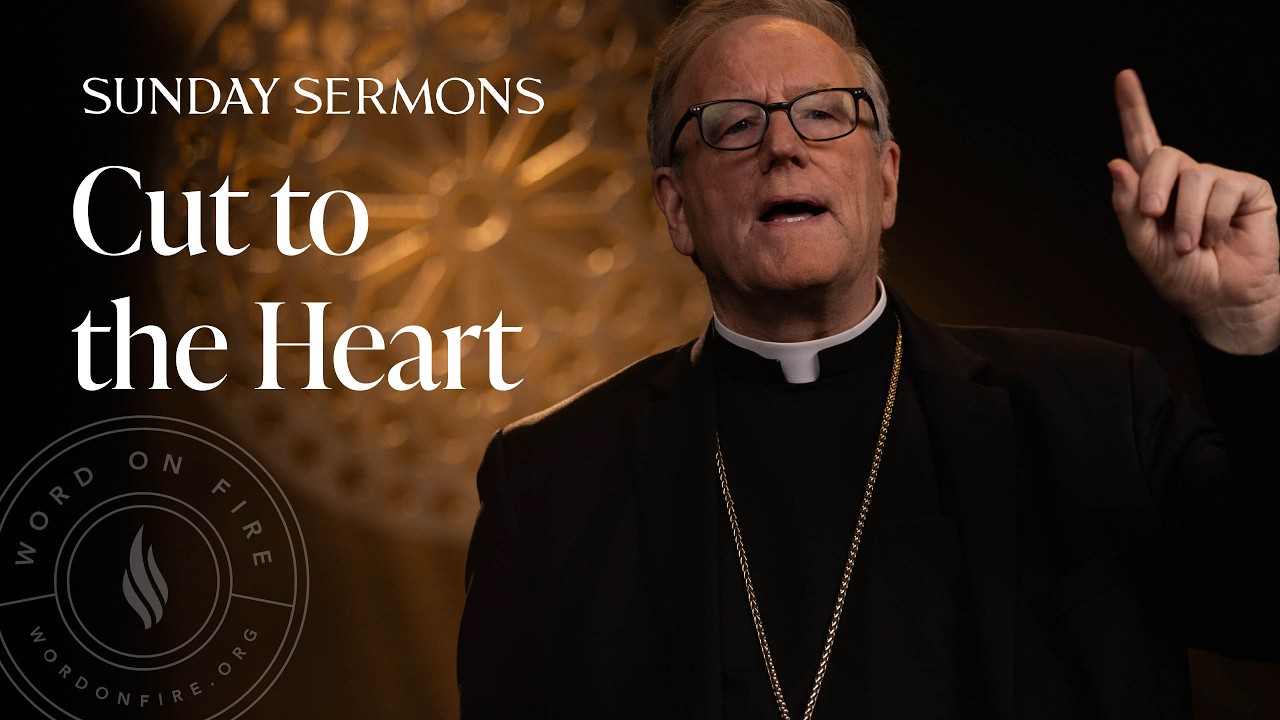
Here is a pretty awesome video from Bishop Baron that Russ shared with us.
For anyone looking for a little extra, visit the Heroic Men website. Its free to register and there is tons of great stuff there.
Next meeting is Wednesday May 20 at 7pm. Hoping to talk ACTS Chapter 2 and start looking at interpretation of some parables. Plus Russ can tell us how his visit to the Pentecostal Mens Group went last week. See you then
Chris